Some groups of people in armed forces community can face extra challenges when trying to access mental health and wellbeing support. Our new Reveal & Respond programme will offer grants to help organisations identify these challenges and respond with support that is tailored, practical and shaped around people’s needs.
Why are we running this programme?
Through programmes such as Hidden Voices and Fulfilling Futures, we’ve learned about the barriers some people face and, importantly, that broad groups are not all the same – people within them can have different experiences, challenges and support needs.
Reveal & Respond is about more than broad labels. It’s designed to support projects that consider how service life, military culture, transition, caring responsibilities and other factors linked to life in the armed forces, can affect access to mental health support for certain groups of people. We’re not looking to fund generic activities or broad community engagement; we want to support projects that get to the root of the barriers to support through people’s specific experiences and circumstances.
Two routes to funding
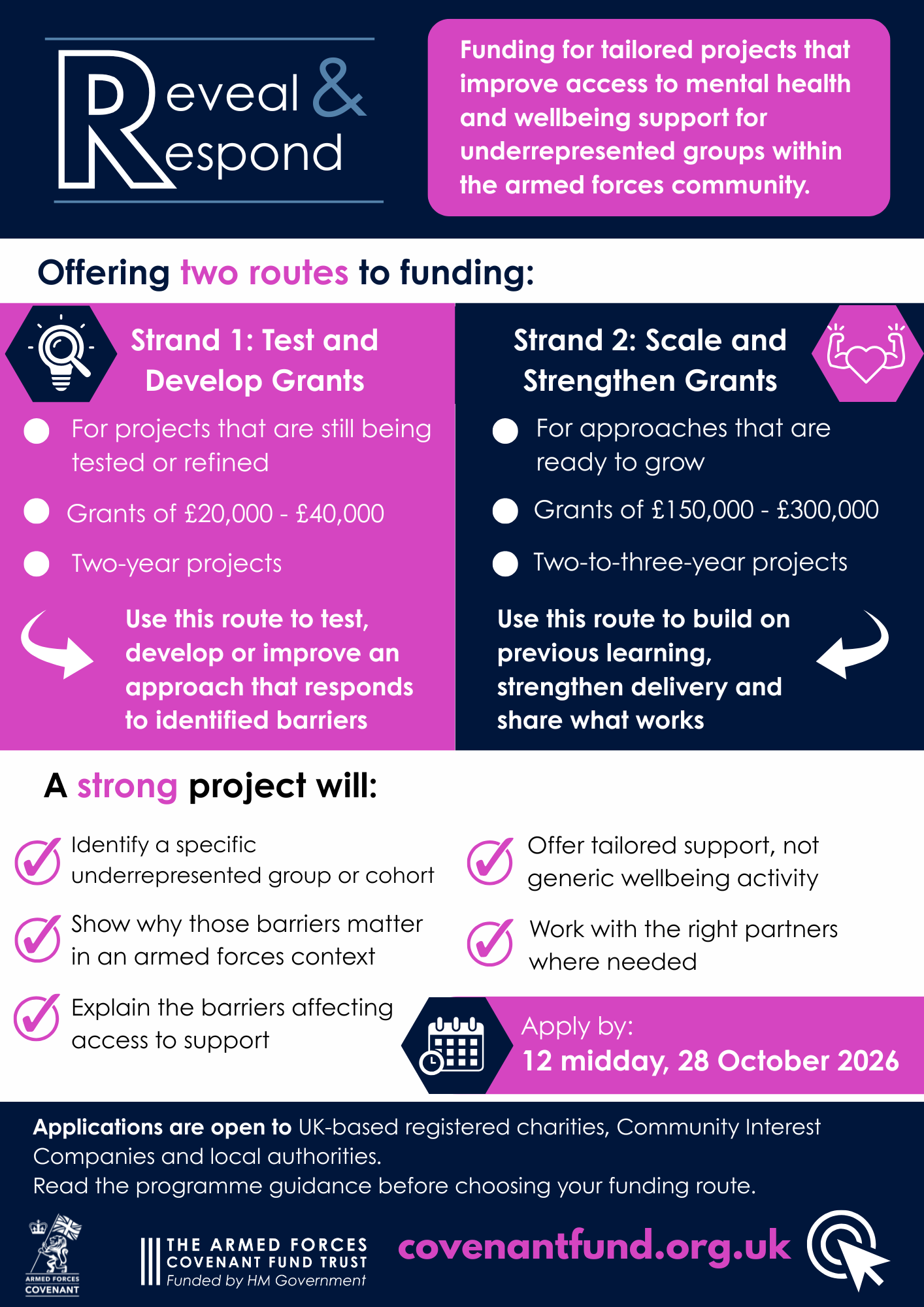
Funding is available for registered charities, CICs and local authorities. Your project may be at the start of its journey, or ready for its next step. Reveal & Respond offers two routes to funding: one to test and develop new approaches, and one to scale and strengthen work that already has learning or evidence behind it.
Strand 1: Test and Develop Grants will offer grants of £20,000 to £40,000 for two-year projects. This strand is for organisations that want to test, develop or refine ways to improve access to mental health and wellbeing support for a specific underrepresented group or cohort within the armed forces community.
This route is for projects that need space to understand what is getting in the way, test ideas and learn from delivery.
Strand 2: Scale and Strengthen Grants will offer grants of £150,000 to £300,000 for projects lasting two to three years. This strand is for larger projects that are ready to grow, improve or strengthen an approach that has already been tested or developed.
If your project already has learning, evidence or delivery experience behind it, this strand may be for you.
What’s it all about?
The projects we fund will ensure underrepresented groups of people in the armed forces community are more able to access mental health and wellbeing support because the project has removed or responded to an unmet need.
If you’re applying under Strand 2, you’ll also need to ensure your project increases, shares and applies learning and understanding of the barriers these groups face, to help improve support.
You’ll need to tell us which specific group of people your project will support and what makes it harder for them to access mental health and wellbeing support. These groups might include female serving personnel with caring responsibilities, bereaved service families who are isolated, LGBT+ personnel or veterans with a lack of trust in mainstream services – or any number of specific cohorts in the forces community.
It’s important you can show us why tailored support is needed, and how people with lived experience have helped shape your project.
Together is better
Specialist organisations, and armed forces specific organisations each bring real strengths. For this programme, we’re looking for the two to come together. We believe that strong partnerships can help a project to achieve better outcomes for the people it supports. So whether you’re a local authority looking to work with specialist organisations, or a specialist in your field looking to work with an armed forces organisation to better understand the needs of armed forces communities. The right mix of understanding and expertise is what’s needed.
Find out more
So, if you’re looking to reveal and respond to the barriers affecting access to mental health and wellbeing support for some in the armed forces community, find out more on our Reveal & Respond programme page. You can also explore our Reveal & Respond infographic (opens an image file) below for key details about the programme.

Applications close at 12 midday on 28 October 2026, with decisions expected by the end of February 2027.